SKILL DEVELOPMENT · 3.0–3.5 PLAYERS
How to Improve from a 3.0 to a 3.5 Pickleball Player: A 30-Day Practice Plan
Are you a 3.0 pickleball player who feels stuck at the same skill level?
Maybe you can hit good shots, understand the rules, and enjoy competitive games—but you still struggle with consistency, controlling the kitchen, or handling opponents who seem to make fewer mistakes.
The good news is that moving from a 3.0 to a 3.5 level doesn't necessarily require more hours on the court. It requires more purposeful practice.
With the right drills, measurable goals, and a consistent routine, you can make meaningful improvements in just 30 days.
Here's how to get started.
1. Understand the Difference Between a 3.0 and 3.5 Player
The biggest difference is often consistency rather than power.
A typical 3.0 player understands the fundamentals but may struggle to execute them reliably under pressure. A 3.5 player generally demonstrates better shot control, improved positioning, and greater consistency during rallies.
| Skill | Developing 3.0 Player | Developing 3.5 Player |
|---|---|---|
| Serve | Usually gets the ball in | Serves consistently with better depth and placement |
| Return | Returns most manageable serves | Returns deeper and recovers toward the kitchen |
| Dinking | Can dink but makes avoidable errors | Sustains more controlled dink rallies |
| Third shot | Often relies on hard drives | Begins choosing between drops and drives |
| Volleys | Reacts to incoming shots | Shows improved control and readiness |
| Footwork | Sometimes gets caught out of position | Moves and recovers more efficiently |
| Strategy | Focuses on individual shots | Makes better decisions based on court position |
These are general development benchmarks, not guarantees of an official rating. Actual ratings also depend on match performance and the rating system used.
2. Focus on Consistency Before Power
One of the most common mistakes developing players make is trying to hit harder instead of hitting more accurately.
Powerful shots can win points, but unnecessary errors can lose far more.
Start by focusing on three fundamentals:
- Clearance: Give your shots enough height over the net to reduce errors.
- Placement: Aim for targets rather than simply hitting the ball back.
- Repeatability: Practice executing the same shot successfully multiple times in a row.
Try this drill: 20-Ball Consistency Challenge
Choose a target area on the opposite side of the court.
Hit 20 balls toward that target and record how many land successfully.
Repeat the drill regularly and compare your results.
For example, if you begin with 11 successful shots out of 20 and later reach 17 out of 20, that's measurable improvement.
The objective is not perfection. It's progress.
3. Develop a Reliable Third-Shot Drop
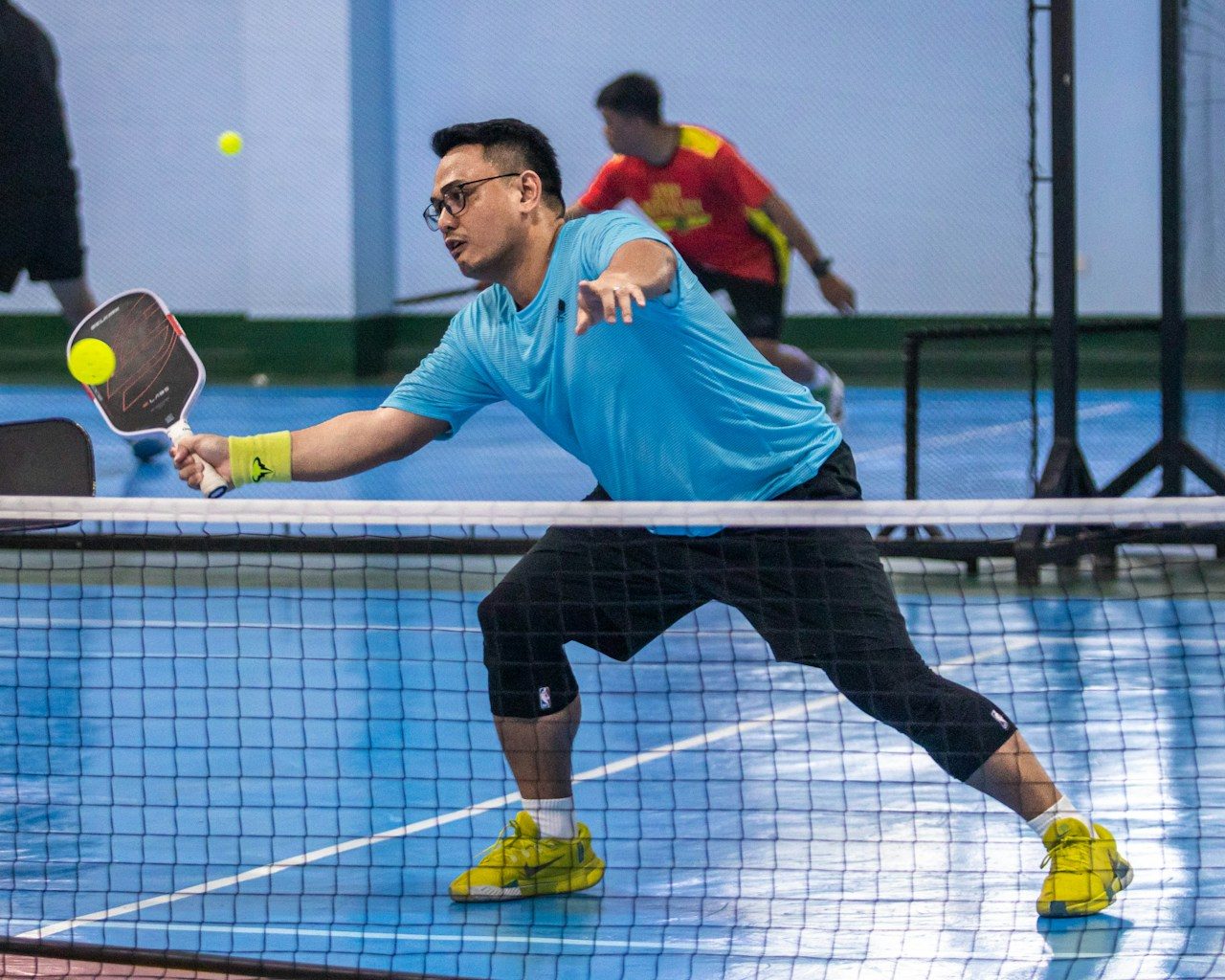
The third-shot drop is one of the most valuable skills for advancing recreational players.
After serving and receiving the return, the serving team often needs a controlled third shot that allows them to move forward toward the non-volley zone, commonly called the kitchen.
A successful drop generally lands softly in or near the opponent's kitchen, making it harder for them to attack.
Third-Shot Drop Drill
- Start near the baseline.
- Aim toward the opponent's kitchen.
- Hit 10 controlled drop shots.
- Count how many land in the intended target area without sitting excessively high.
- Repeat for three sets.
Focus on a smooth swing, controlled paddle face, and appropriate trajectory.
Practice goal: Gradually increase your successful drops while maintaining control.
Remember that a third-shot drive can also be the right choice. The objective is to develop options rather than forcing a drop on every point.
4. Improve Your Dinking Consistency
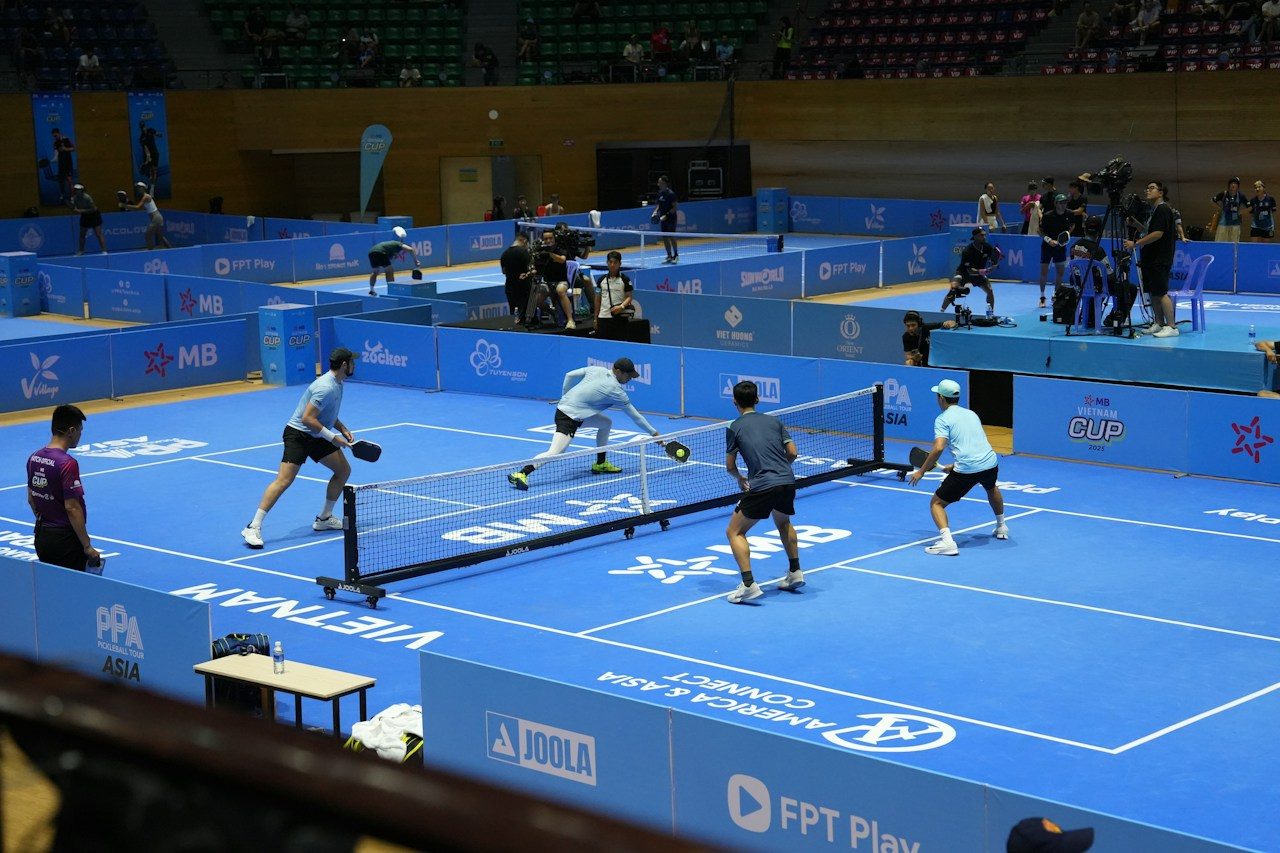
Dinking is about patience, placement, and controlling the pace of a rally.
At the 3.0 level, many players lose points by attacking balls that aren't attackable or by lifting dinks too high.
As you improve, work on keeping the ball low and making your opponent hit from uncomfortable positions.
Crosscourt Dinking Drill
Practice crosscourt dinks with a partner.
Begin with a goal of five consecutive successful shots, then work toward 10, 15, and 20.
Keep your paddle in front of your body and use controlled movements.
As your consistency improves, introduce variations in placement and depth.
Key lesson: You don't need to win every dink exchange immediately. Often, the player who stays patient creates the better opportunity.
5. Make Your Serve and Return More Effective
Serving and returning are two of the easiest areas to measure improvement.
A deeper serve can make it harder for your opponent to attack immediately. A deep return gives you more time to approach the kitchen and establish a strong court position.
Serve and Return Challenge
For serves:
- Hit 20 serves.
- Aim for a designated deep target area.
- Record how many land successfully.
For returns:
- Practice returning balls deep into the opponent's court.
- Focus on consistency and recovering toward the kitchen.
- Track your successful returns out of 20 attempts.
Work on accuracy first, then introduce more variation in placement and pace.
6. Improve Your Footwork and Court Positioning
Sometimes the problem isn't your paddle technique—it's where you're standing.
Better players learn to anticipate shots, move efficiently, and maintain balanced court positioning.
Three habits to practice:
- Move toward the kitchen after returning serve when appropriate.
- Use a split step as your opponent prepares to hit.
- Avoid attacking difficult balls while moving backward or off balance.
Footwork Drill
Begin near the baseline and practice moving forward toward the kitchen.
Pause in a balanced ready position before simulating your next shot.
Repeat 10 times, focusing on controlled movement rather than speed.
Good positioning makes many difficult shots easier.
7. Follow a Structured 30-Day Pickleball Practice Plan
Random practice can be enjoyable, but structured practice makes it easier to identify progress.
Here's a simple four-week framework.
Week 1: Build Consistency
Focus on serves, returns, basic groundstrokes, and reliable contact.
Establish your starting accuracy scores and identify your most common errors.
Week 2: Improve Control at the Kitchen
Practice dinking, controlled volleys, and positioning.
Work on extending rallies without making unnecessary mistakes.
Week 3: Develop Third-Shot Skills
Practice drops, drives, and transitions from the baseline toward the kitchen.
Learn to recognize when to use different shots.
Week 4: Apply Your Skills Under Pressure
Combine your drills with realistic game situations.
Track your progress and identify the skills that still need attention.
Your improvement will depend on your starting level, practice quality, and opportunities to play. Thirty days is a useful training period, not a guaranteed timeline for achieving a new rating.
8. Why Tracking Your Progress Matters
Many players practice regularly but have no reliable way to tell whether they're improving.
Tracking a few simple numbers can change that.
Consider recording:
- Successful serves out of 20 attempts.
- Successful deep returns out of 20.
- Controlled third-shot drops out of 10.
- Consecutive successful dinks.
- Notes about footwork, positioning, and match decisions.
Compare your results weekly rather than judging your improvement from a single game.
Progress isn't always linear. Some days will feel better than others, but consistent measurement can help you identify real trends.
9. Can a Pickleball Ball Machine Help You Improve Faster?
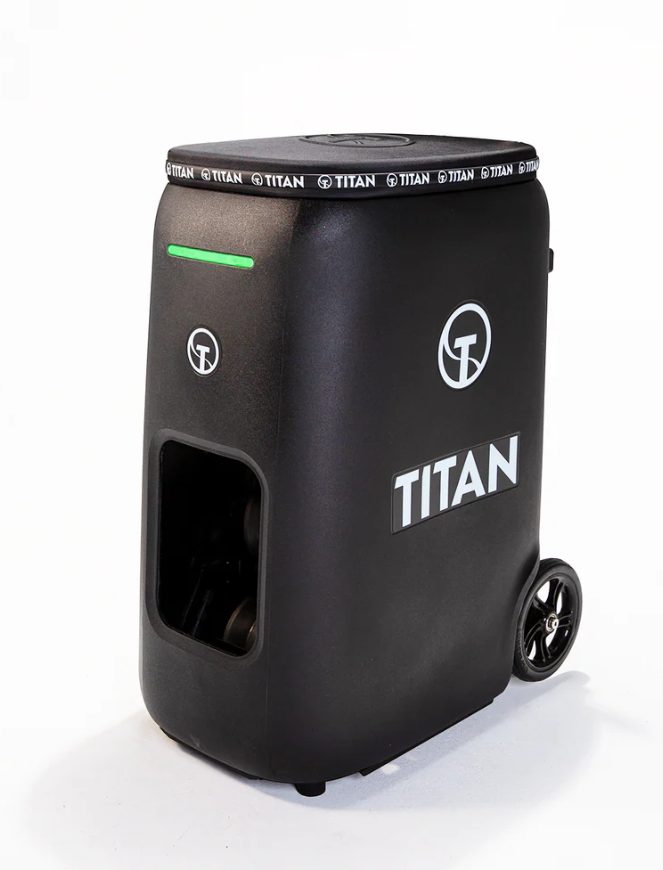
A ball machine can be a valuable practice tool because it provides repeated, predictable feeds.
Instead of waiting for a partner to hit the right ball, you can concentrate on a particular technique and repeat it many times.
Ball machines can be especially useful for:
- Groundstroke consistency.
- Forehand and backhand control.
- Volleys and reaction drills.
- Footwork and movement patterns.
- Repeated target practice.
However, ball machines cannot replace actual match play. Reading opponents, making tactical decisions, and responding to unpredictable shots still require playing with other people.
The strongest practice routine combines repetition, deliberate drills, and real-game experience.
Final Thoughts: Small Improvements Add Up
Moving from a 3.0 toward a 3.5 pickleball level isn't about mastering every advanced shot overnight.
It's about making fewer unforced errors, improving your court position, developing reliable shots, and practicing with purpose.
Start with one or two skills, measure your results, and build from there.
Practice smarter, stay consistent, and give yourself 30 days to see what focused training can accomplish.